
 English
 German
 French
 Russian
 Spanish
 Japanese
 Korean
 Portuguese
 Ukrainian
 Arabic
 Italian
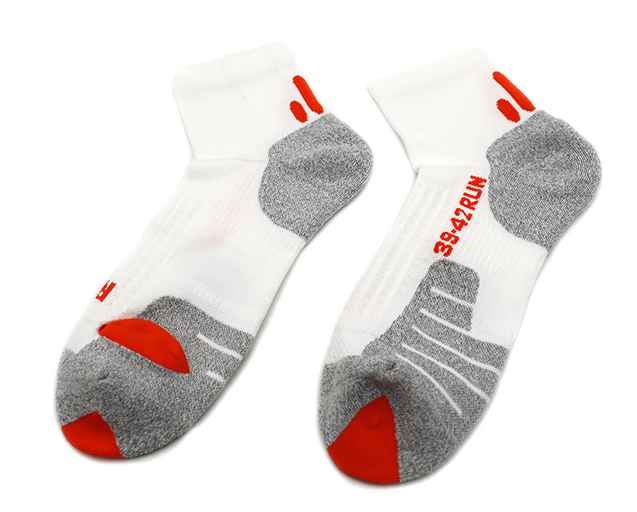
Why Marathon Running Socks Require a Different Design Philosophy
A marathon is not simply "longer running." It is a sustained stress test on the foot.Over 42.195 kilometers,even small design flaws can escalate into pain,blisters,or muscle fatigue.
Running socks are typically designed for:
• Short to medium distances
• Lightweight feel and breathability
• General comfort during 30–90 minutes of activity
Marathon running socks,on the other hand,are built for:
• Long-distance repetition and impact absorption
• Strategic cushioning from heel to toe
• Blister prevention under prolonged moisture and friction
• Stability as feet swell and fatigue sets in
In short,running socks focus on comfort,while marathon socks focus on endurance protection.
Cushioning Strategy: The Core Difference That Matters Most
The most critical distinction between standard running socks and marathon socks lies in how cushioning is distributed.
Uniform Cushioning vs.Targeted Cushioning
Most everyday running socks use a uniform thickness across the foot.This approach keeps the sock lightweight but offers limited protection during extended runs.
Marathon running socks use a sock cushioning strategy based on biomechanics:
• Heel cushioning
Absorbs repeated impact during heel strike,reducing stress on joints and soft tissue over thousands of landings.
• Forefoot cushioning
Supports push-off zones and helps distribute pressure evenly during toe-off,especially in the later stages of a race.
• Toe protection
Minimizes friction and pressure from foot swelling and forward movement inside the shoe,reducing nail trauma and hotspots.
This heel-to-toe cushioning layout helps runners maintain efficiency and comfort deep into long-distance runs.
Blister Prevention: Managing Moisture and Friction Over Time
Blisters are one of the most common reasons runners fail to finish long races.Marathon socks are engineered specifically to reduce this risk.
Key design factors include:
• High-density knitting in friction zones
• Seamless or flat-toe construction to eliminate rubbing
• Moisture-wicking yarns that move sweat away from the skin
• Secure fit to reduce internal sock movement
Dry feet alone are not enough—controlled moisture and reduced micro-movement are what truly prevent blisters during long-distance running.
Fit and Stability During Long-Distance Fatigue
As distance increases,foot shape changes.Swelling,muscle fatigue,and loss of proprioception all affect how the foot interacts with the shoe.
Marathon running socks often include:
• Light compression around the arch for midfoot stability
• Anatomical shaping for left and right feet
• Reinforced heel pockets to prevent slipping
This stable fit reduces unnecessary friction and energy loss,allowing runners to maintain form even when fatigue sets in.
Breathability and Sweat Management Over Hours,Not Minutes
Breathability in marathon socks is engineered differently than in regular running socks.
Instead of simply allowing air flow,marathon socks focus on moisture management:
• Rapid sweat transfer away from the skin
• Fast drying to prevent prolonged dampness
• Ventilation zones in high-heat areas such as the forefoot
The result is a more stable micro-environment inside the shoe,reducing skin breakdown during long runs.
Durability: Built for Repetition,Not Just Speed
Marathon socks are designed to withstand:
• Repeated high-impact landings
• Long training cycles
• Frequent washing without loss of cushioning or compression
Reinforced yarns in the heel,forefoot,and toe areas ensure consistent performance over time,making marathon socks a long-term investment rather than a disposable accessory.
When Do Runners Truly Need Marathon Socks?
Marathon running socks are recommended when:
• Training distances exceed 15–20 km
• Preparing for marathons or ultramarathons
• Experiencing recurring blisters or forefoot pain
• Needing reliable comfort for long-distance road running
For brands and suppliers,these use cases define a clear market demand for specialized long-distance running socks.
Custom Marathon Running Socks for Performance-Focused Brands
As expectations for athletic gear continue to rise,off-the-shelf solutions are no longer enough.Brands are increasingly turning to custom running socks to control performance,fit,and brand identity.
At Feelingwaysox,we specialize in:
• Custom marathon running socks with zone-based cushioning
• Advanced moisture-wicking and blister-prevention designs
• OEM and private-label production for sports brands and retailers
• Flexible material selection and performance tuning
Whether you are developing a marathon sock line or upgrading an existing running sock collection,our team supports you from concept to scalable production.
Build running socks that go the distance—partner with Feelingwaysox for custom performance solutions designed for marathon runners.