
 English
 German
 French
 Russian
 Spanish
 Japanese
 Korean
 Portuguese
 Ukrainian
 Arabic
 Italian
What Are Support Socks?
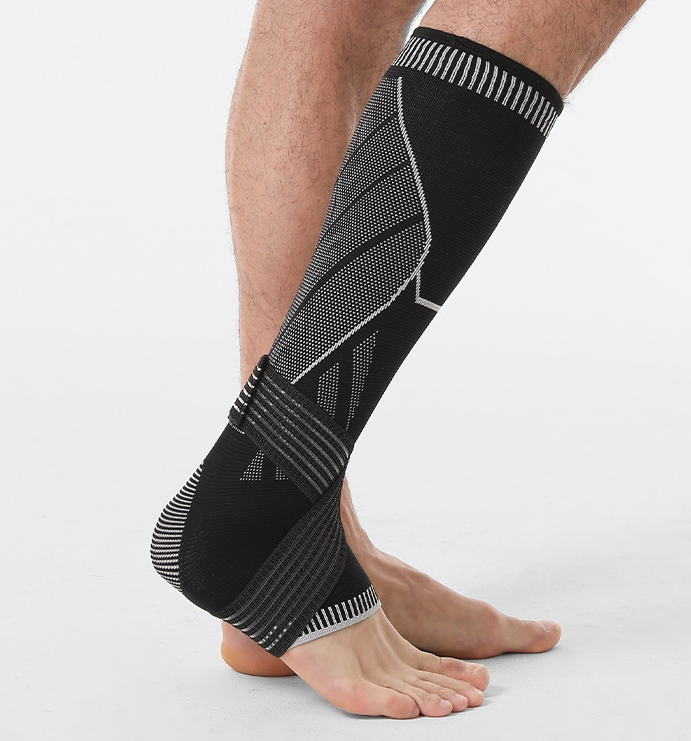
Support socks are not ordinary athletic socks.They are designed with targeted compression and structural reinforcement around the ankle and foot to enhance stability during movement.
Most athletic support socks combine:
• Graduated compression to improve circulation and reduce muscle vibration
• Reinforced ankle zones for added lateral stability
• A snug,anatomical fit to minimize slipping inside the shoe
Because of these features,support socks are commonly used in sports involving jumping,cutting,sprinting,and sudden stops,all of which increase the risk of ankle injury.
How Support Socks Help Reduce Ankle Sprain Risk
Improved Ankle Stability
Support socks apply gentle compression around the ankle joint.This does not lock the ankle in place,but it helps limit excessive rolling or twisting,especially during quick directional changes.
Enhanced Proprioception
One of the key benefits of support socks is improved proprioception—the body's awareness of joint position and movement.The close-fitting compression helps athletes sense ankle alignment earlier,allowing muscles to react faster and correct unstable movements before a sprain occurs.
Reduced Muscle Fatigue
During long training sessions or games,fatigue reduces ankle control.Compression support helps minimize muscle vibration and improve blood flow,allowing athletes to maintain better stability even late in activity.
What Support Socks Cannot Do
Support socks are not a replacement for proper training or injury prevention habits.They should be viewed as an aid,not a guarantee.
Support socks cannot:
• Replace strength and balance training
• Eliminate the need for proper warm-ups
• Compensate for poor footwear choices
• Prevent injuries caused by severe impacts or poor technique
Think of support socks as part of a layered protection system,not a standalone solution.
Who Benefits Most from Support Socks?
Support socks are especially useful for:
• Athletes with a history of ankle sprains
• Players in high-impact,fast-paced sports
• Individuals training or competing for long durations
• Athletes seeking extra stability without bulky braces
For casual exercise or low-impact activities,standard athletic socks may be sufficient.
What Research and Sports Medicine Suggest
Sports medicine studies generally show that compression and support socks can reduce the recurrence of ankle sprains,particularly in athletes with previous injuries or ankle instability.
They are most effective when combined with:
• Strength and mobility training
• Proper footwear
• Fatigue management and recovery
For athletes without prior ankle issues,support socks still offer benefits—but mainly as preventive support rather than guaranteed protection.
Choosing the Right Support Socks
To gain real benefits,sock design matters.Look for:
• Moderate compression (firm but not restrictive)
• Clearly defined ankle support zones
• Moisture-wicking,breathable materials
• A secure fit that works with your footwear
A poorly fitting sock,no matter how advanced,will not deliver results.
The Bottom Line
Support socks can play a valuable role in ankle sprain prevention,especially in high-risk sports.They improve stability,enhance body awareness,and help manage fatigue—but they are not invincible armor.
The smartest approach is to combine support socks,proper training,quality footwear,and good recovery habits.When used correctly,support socks become a reliable part of a well-rounded athletic support system—not just another accessory.