
 English
 German
 French
 Russian
 Spanish
 Japanese
 Korean
 Portuguese
 Ukrainian
 Arabic
 Italian
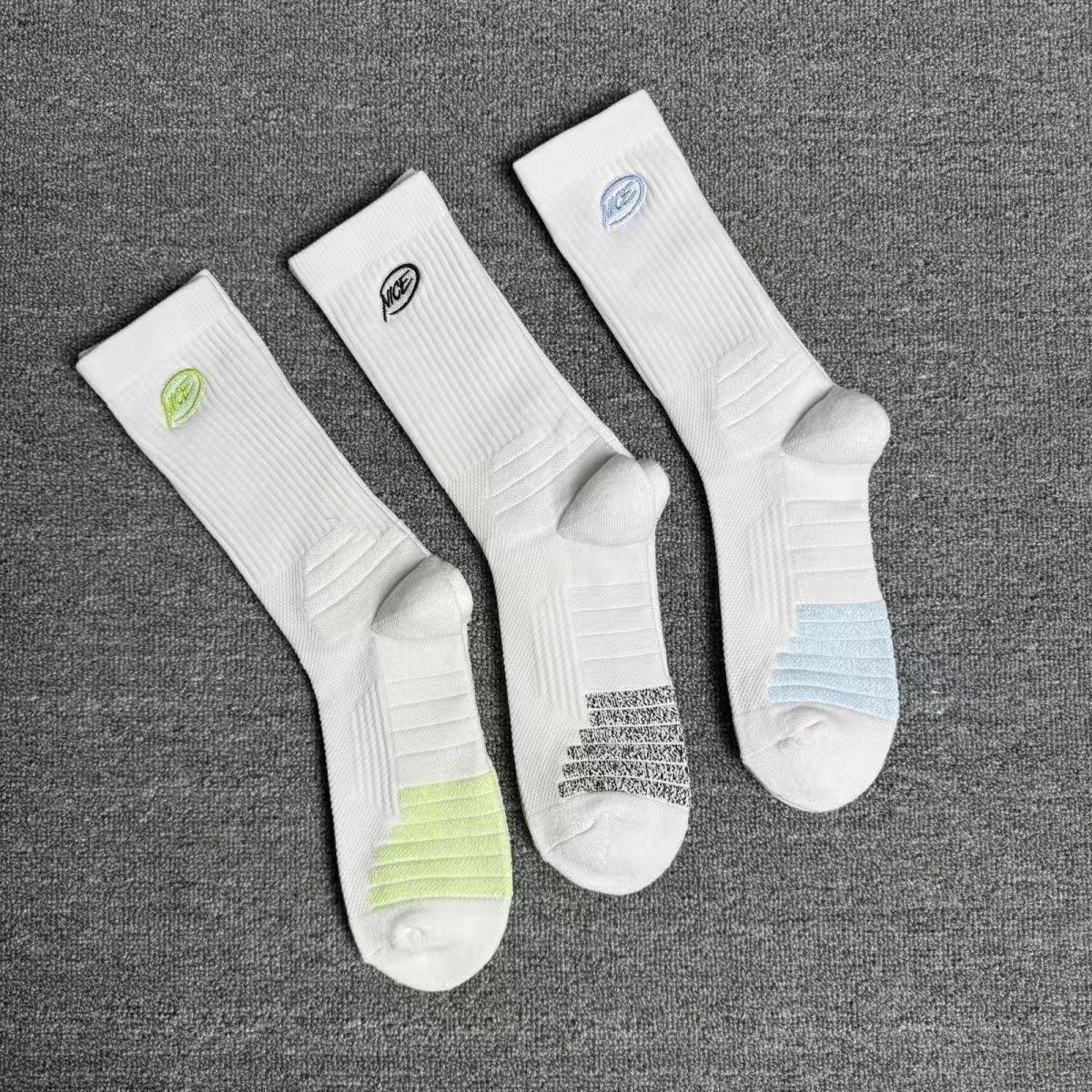
Why Choose Recycled Yarns for Sports Socks?
1.Reduce Dependence on Virgin Materials
Traditional socks use new fibers like cotton,nylon,and polyester.In contrast,recycled polyester (rPET) and recycled nylon are made from materials such as discarded plastic bottles,fishing nets,and textile waste.
For example,Repreve® polyester turns used bottles into high-quality performance fibers—saving resources and cutting waste.
2.Boost Your Brand's Green Credentials
Saying "our socks are made from recycled materials" instantly positions your brand as environmentally responsible.Many buyers and distributors now prioritize sustainability and ESG (Environmental,Social,and Governance) values when choosing suppliers.
3.No Performance Trade-Off
Modern recycled fibers perform just as well—if not better—than virgin ones.They're durable,elastic,moisture-wicking,and quick-drying.
Athletes can still enjoy top-tier performance,while your brand earns eco credibility.
4.A Story That Sells
People love stories."These socks were made from 10 recycled bottles" is more memorable than "cotton socks for training." It's an authentic narrative that strengthens your brand identity and makes your marketing more powerful.
Best Recycled Materials for Sustainable Sports Socks
• Recycled Polyester (rPET): Lightweight,durable,and moisture-wicking—ideal for running and training socks.
• Recycled Nylon: Made from fishing nets or carpets,it adds strength and elasticity to high-wear areas like heels and toes.
• Recycled Cotton: Provides a soft,natural feel while reducing textile waste.
• Blended Yarns: Combine recycled fibers with antibacterial or moisture-control yarns for advanced performance.
For a balanced design,use recycled materials for the main body and reinforced recycled nylon for stress points.This ensures both comfort and longevity.
Sustainability Beyond Materials
Using recycled yarn is only part of the equation.True sustainability runs through your entire process:
• Certified Factories: Partner with manufacturers following eco-friendly standards and ethical labor practices.
• Low-Impact Dyeing: Choose dyes with minimal environmental impact and ensure Oeko-Tex® or similar certifications.
• Eco Packaging: Use recyclable or biodegradable materials and avoid unnecessary layers.
• Transparent Supply Chain: Share your "from bottle to sock" journey—consumers trust transparency.
• Lifecycle Awareness: Consider not just production,but also wear,washing,and recyclability after use.
Challenges (and Smart Ways to Overcome Them)
Higher Costs: Recycled fibers can be more expensive,but bulk orders and optimized production help offset this.
Limited Colors: Some recycled yarns have fewer dye options—start with classic tones (black,gray,navy) before expanding.
Market Education: Use visuals,infographics,or athlete testimonials to explain the value of recycled socks.
Performance Perception: Prove that "eco-friendly" doesn't mean "less effective" through data and real-world feedback.
The Future of Sustainable Performance Socks
For brands like Feelingwaysox,integrating sustainable materials and recycled yarns isn't just an environmental choice—it's a strategic one.By combining ethical sourcing,functional innovation,and authentic storytelling,you can create socks that perform,inspire,and make a difference.
It's time to turn "eco-friendly" from a buzzword into a business advantage.
Let's build a future where athletic performance and sustainability walk hand in hand—one pair of socks at a time.