
 English
 German
 French
 Russian
 Spanish
 Japanese
 Korean
 Portuguese
 Ukrainian
 Arabic
 Italian
Heat Transfer Printing
Heat transfer printing is one of the most common methods for printing socks.The process is usually to transfer the pattern from the film to the surface of the sock through hot pressing.The advantage of heat transfer printing lies in its ability to print very complex and detailed patterns,which is suitable for multi-color and gradient effects,and the printing effect is clear.
Benefits:
1.Capable of printing highly complex patterns with fine details
2.Ideal for small-batch custom production
3.Produces bright,high-quality colors
Cons:
1.Susceptible to wear and tear from friction,causing patterns to fade over time
2.Some fabrics may not be suitable for heat transfer printing,limiting fabric options
Silk Screen Printing
Silk screen printing is a traditional technique often used in mass production.A mesh screen is used to transfer ink onto the sock's surface,with each color requiring its own screen.This method works best for simple,single- or two-color designs.
Benefits:
1.Cost-effective,especially for mass production
2.Prints are durable and resistant to wear
3.Compatible with various fabrics
Cons:
1.Limited to simpler,fewer-color designs
2.The setup process can be time-consuming and costly
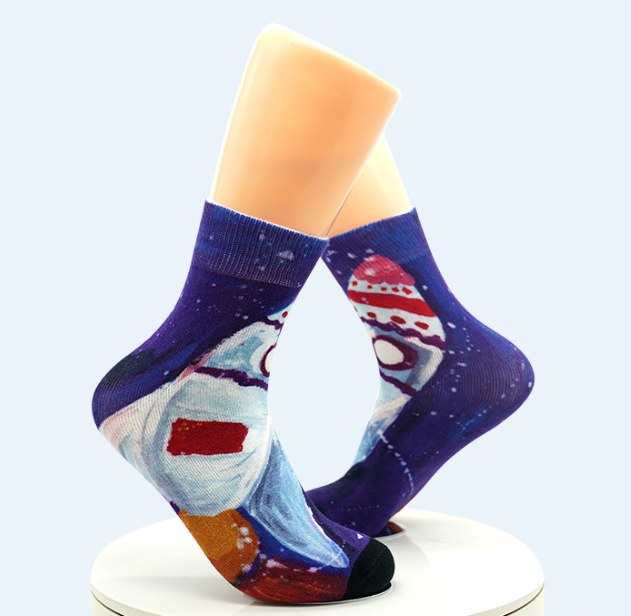
Digital Printing(DTG)
Digital printing,also known as Direct to Garment (DTG),uses an inkjet printer to directly apply ink onto the socks.This innovative method doesn't require templates and allows for highly complex and colorful designs.
Benefits:
1.Perfect for complex,multi-color patterns
2.Ideal for small-batch production
3.High precision,with no color discrepancies
Cons:
1.Relatively high cost compared to traditional methods
2.Works best with thinner socks; thicker fabrics may not be suitable
Sublimation Printing
Sublimation printing is an advanced technique,often seen as an upgrade to heat transfer printing.It uses special inks and heat to transfer patterns directly into the sock fabric,ensuring long-lasting adhesion and vibrant designs.
Benefits:
1.Bright colors and durable prints
2.Excellent for full-pattern and gradient color designs
3.High resistance to fading and peeling
Cons:
1.Works only on white or light-colored socks
2.Typically requires polyester fabric for optimal results
Brush Printing
Brush printing involves using a brush to apply ink onto socks,creating textured or unique effects.This technique is more often used in hand printing or for specialized designs.
Benefits:
1.Ideal for creating unique textures or designs with irregular surfaces
2.Adds a distinctive artistic touch to the design
Cons:
1.Not suitable for mass production
2.Lower printing accuracy compared to other methods
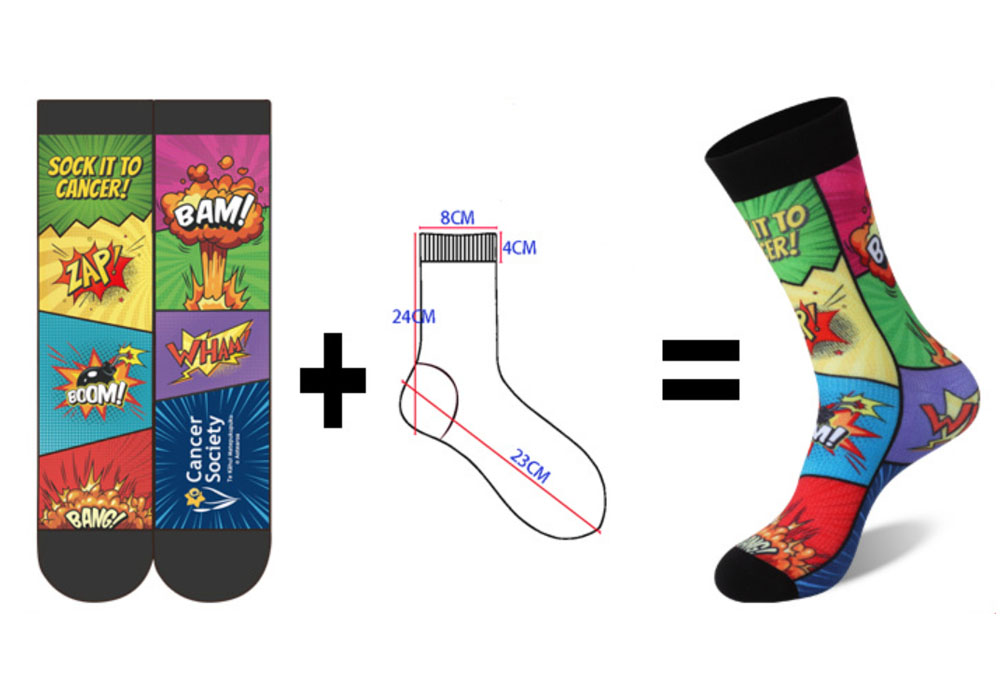
Choosing the Right Printing Method
The choice of sock printing method depends on several factors: the complexity of the design,the production scale,and the fabric used.Whether you're looking for heat transfer printing,screen printing,or a more specialized technique like sublimation printing,each method has its strengths and weaknesses.
By choosing the right method,you can enhance the quality,comfort,and durability of your custom socks.
Start Customizing Your Socks Today
At Feelingwaysox,we specialize in custom sock production and offer a variety of printing techniques to match your needs.From screen printing to digital printing and sublimation printing,we provide high-quality options to bring your sock designs to life.
Create your custom socks now—with professional printing techniques that deliver durability and style.