
 English
 German
 French
 Russian
 Spanish
 Japanese
 Korean
 Portuguese
 Ukrainian
 Arabic
 Italian
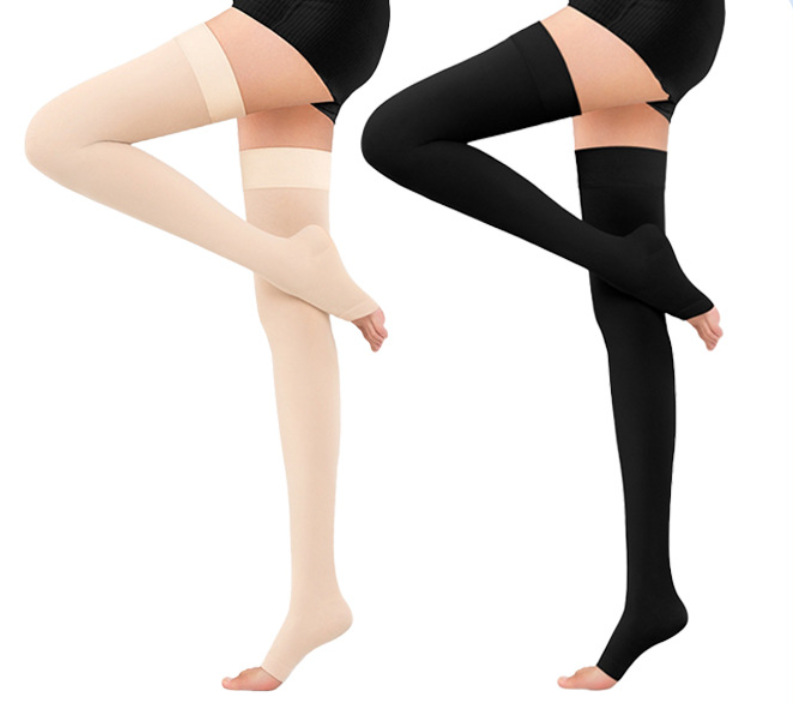
What Are Medical Compression Socks?
Medical compression socks,also known as compression stockings,are designed to support healthy blood circulation in the lower limbs.Their primary function is to improve venous return by applying controlled pressure to the legs,helping to reduce swelling,fatigue,and circulation-related discomfort.
Unlike regular socks or "tight-fit" athletic socks,medical compression socks are defined by precision,not just elasticity.
The Core Principle: Graduated Compression
The defining feature of medical compression socks is graduated compression.
How Graduated Compression Works
Graduated compression means:
• Highest pressure at the ankle
• Gradually decreasing pressure moving up the calf
• Lowest pressure near the knee or thigh
This pressure gradient helps blood move upward against gravity,supporting circulation back to the heart.
If a sock applies uniform pressure from top to bottom,it does not provide true medical compression—no matter how tight it feels.
Pressure Control: Measured,Not Estimated
Medical compression is not based on comfort or feel.It is measured in mmHg (millimeters of mercury),the international medical standard for pressure.
Common compression levels include:
• Mild compression: Daily wear,long sitting or standing,travel
• Moderate compression: Venous fatigue,mild varicose symptoms
• Higher compression: Medical or clinical use (professional guidance recommended)
From a manufacturing standpoint,the challenge is not just achieving a pressure level—but maintaining stable,accurate pressure at different leg zones over time.
Why Medical Compression Socks Require Specialized Knitting
Medical compression socks are typically produced using advanced circular knitting machines,not standard sock knitting.
Key technical factors include:
• Zonal Knitting Structures
• Different areas of the sock—ankle,calf,instep,sole—are knitted with distinct stitch densities and yarn tensions to create the pressure gradient.
• Stitch Density & Yarn Tension Control
Precise control of:
• Needle count
• Stitch length
• Yarn tension
This allows manufacturers to fine-tune compression levels without relying solely on elastic fibers.
Long-Term Stability
Medical compression socks are designed to retain pressure performance after repeated wear and washing,rather than feeling tight only when new.
Yarn & Material Selection: Pressure Comes From Structure
A common misconception is that compression socks are simply "loaded with spandex."
In reality,effective compression comes from the interaction of materials and structure,including:
• Elastic fibers (such as spandex or Lycra) for controlled stretch and recovery
• High-strength base fibers (nylon or polyester) for durability and pressure stability
• Engineered knitting tension to distribute compression accurately
High-quality medical compression socks must balance:
• Breathability
• Skin comfort
• Abrasion resistance
• Long-term elasticity
Material selection directly impacts performance and product lifespan.
Why Sizing Matters in Medical Compression Socks
Medical compression socks must be size-specific.
Compression effectiveness depends on:
• Structure × Size × Tension
• Incorrect sizing can lead to:
• Insufficient compression (loss of medical function)
• Excessive pressure (discomfort or risk)
That's why professional medical compression socks use detailed size systems,often based on ankle circumference,calf circumference,and leg length—not just generic S/M/L labels.
Medical Compression Socks vs.Regular Compression Socks
Here's the honest truth:
If a sock lacks:
• Graduated pressure design
• Pressure values measured in mmHg
• Stable,zoned knitting structures
…it is not a medical compression sock,regardless of how tight it feels.
Medical compression socks are the result of medical logic,textile engineering,and manufacturing precision,not marketing claims.
Manufacturing Medical Compression Socks: What B2B Buyers Should Look For
When sourcing or developing medical compression socks,professional buyers should evaluate:
• Accuracy and consistency of pressure gradients
• Knitting technology and machine capability
• Material performance and durability testing
• Size system design
• Quality control and pressure verification processes
These factors separate true medical-grade products from ordinary compression-style socks.
Custom Medical Compression Socks with Feelingwaysox
At Feelingwaysox,we specialize in custom medical compression sock manufacturing for brands,distributors,and healthcare suppliers worldwide.
We support:
• Custom pressure levels and graduated compression designs
• Material optimization for comfort and durability
• Size system development
• OEM & private label medical compression socks
• Stable,scalable production with strict quality control
If you're developing or sourcing custom medical compression socks,our team helps ensure that every pair delivers scientifically correct pressure—not just tightness.
Contact Feelingwaysox today to start your custom medical compression sock project with confidence.