
 English
 German
 French
 Russian
 Spanish
 Japanese
 Korean
 Portuguese
 Ukrainian
 Arabic
 Italian
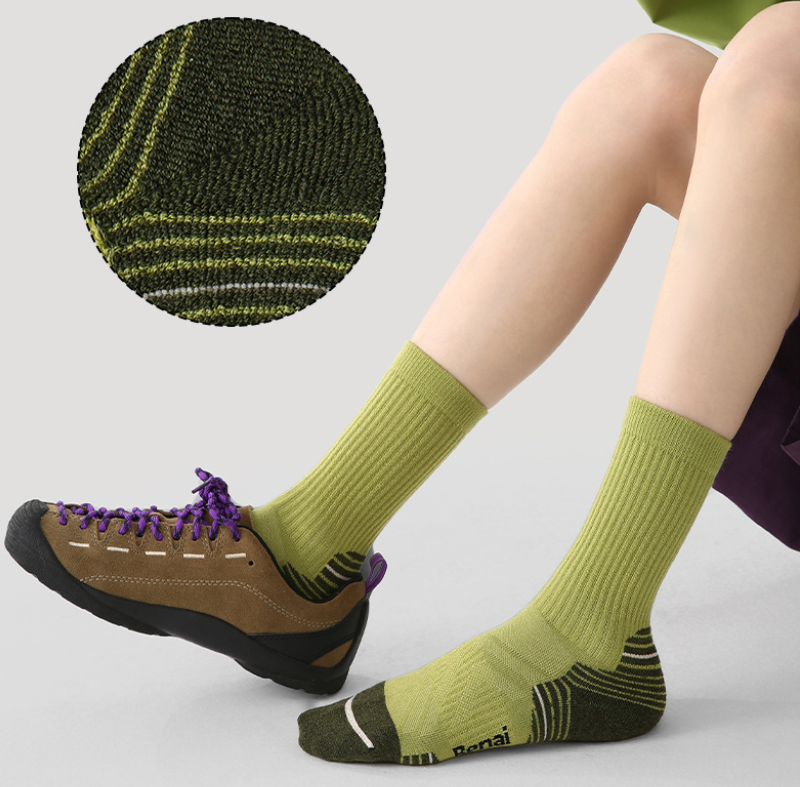
The Problem with Cotton Socks for Hiking
Cotton socks may feel comfortable for everyday use,but hiking places very different demands on footwear materials.Long hours of walking,changing weather conditions,and repeated friction require socks with specific performance characteristics.
Cotton fibers struggle to meet these requirements in several important ways.
Cotton Absorbs Moisture but Does Not Wick It Away
During hiking,feet produce a significant amount of sweat.In fact,the human foot contains thousands of sweat glands that can generate moisture continuously during long walks.
Cotton fibers are highly absorbent.While this may sound beneficial,cotton has one major drawback: it absorbs moisture but does not move it away from the skin.
When cotton socks absorb sweat,the moisture remains trapped in the fabric rather than evaporating quickly.As a result,hikers often experience:
• Damp socks
• Increased friction inside the shoe
• Reduced overall comfort
In contrast,moisture wicking hiking socks made from technical fibers or merino wool pull sweat away from the skin and allow it to evaporate more efficiently.
Keeping feet dry is one of the most important factors for a successful hiking experience.
Wet Cotton Socks Greatly Increase Blister Risk
Blisters are one of the most common problems during long hikes.
When socks become wet,friction between the foot,sock,and shoe increases.Over thousands of steps,this friction can create "hot spots" that eventually develop into painful blisters.
Wet cotton socks make this situation worse because they cling to the skin and hold moisture against the foot.
In addition,prolonged exposure to moisture softens the skin,making it more vulnerable to irritation and damage.
This is why many outdoor enthusiasts prioritize blister prevention hiking socks designed with moisture management and friction control in mind.
Cotton Socks Dry Very Slowly Outdoors
In real outdoor environments,it is almost impossible to keep socks completely dry.
Rain,river crossings,morning dew,and sweat can all cause socks to become wet.When this happens,drying speed becomes extremely important.
Unfortunately,cotton socks take a long time to dry.Once saturated,they can remain damp for hours.
Wet socks can lead to several issues during hiking:
• Cold feet in cooler environments
• Increased friction and discomfort
• Reduced insulation performance
Technical hiking socks made from wool or synthetic materials typically dry much faster,making them better suited for unpredictable outdoor conditions.
Wet Cotton Socks Become Heavy and Uncomfortable
Another disadvantage of cotton is weight gain when wet.
When cotton fibers absorb water,they become significantly heavier.During a long hike,this additional weight may seem small but can quickly add up.
Every step requires lifting your foot thousands of times.Even slight increases in sock weight can reduce comfort and contribute to fatigue over long distances.
Modern performance hiking socks are designed to remain lightweight even in humid conditions.
Cotton Socks Tend to Develop Odor Quickly
Long hikes often involve hours—or even days—of continuous activity.In these conditions,odor control becomes an important factor for comfort.
Cotton fibers easily absorb sweat and skin oils,creating an ideal environment for bacteria growth.As bacteria multiply,unpleasant odors can develop quickly.
In comparison:
• Merino wool hiking socks naturally resist odor
• Synthetic hiking socks often include antibacterial treatments
These materials help maintain freshness during extended outdoor adventures.
Cotton vs Wool Hiking Socks: What Do Serious Hikers Prefer?
Because of these limitations,experienced hikers rarely rely on cotton socks.Instead,they choose materials designed specifically for outdoor performance.
One of the most popular options is merino wool hiking socks.
Merino wool offers several advantages that make it ideal for hiking:
• Excellent moisture management
• Natural temperature regulation
• Effective odor resistance
• Comfort even when slightly damp
Many modern hiking socks combine merino wool with nylon or spandex to improve durability and elasticity.
This combination creates high-performance hiking socks capable of handling long-distance trekking and demanding outdoor environments.
Why Choosing the Right Hiking Socks Matters
Socks may seem like a small piece of equipment,but they have a significant impact on hiking comfort and performance.
The right pair of moisture wicking hiking socks can help hikers:
• Keep their feet dry
• Reduce friction during long walks
• Prevent blisters
• Maintain comfort in changing weather conditions
For outdoor brands and retailers,developing high-quality hiking socks is an important opportunity to meet the growing demand for technical outdoor gear.
Custom Hiking Socks for Outdoor Brands
As the outdoor market continues to grow,more brands are looking to develop specialized custom hiking socks that deliver both performance and durability.
At Feelingwaysox,we work with global brands,retailers,and distributors to develop high-performance outdoor socks designed for real hiking conditions.
Our capabilities include:
• Custom merino wool hiking socks development
• Moisture-wicking and breathable sock structures
• Reinforced heel and toe construction for durability
• Blister prevention design for long-distance hiking
• OEM and private-label manufacturing
As an experienced socks supplier,we help brands turn innovative ideas into reliable,scalable products.
If you are developing a new outdoor collection or upgrading your existing hiking sock line,Feelingwaysox can help you create custom hiking socks designed for performance,durability,and comfort on the trail.