
 English
 German
 French
 Russian
 Spanish
 Japanese
 Korean
 Portuguese
 Ukrainian
 Arabic
 Italian
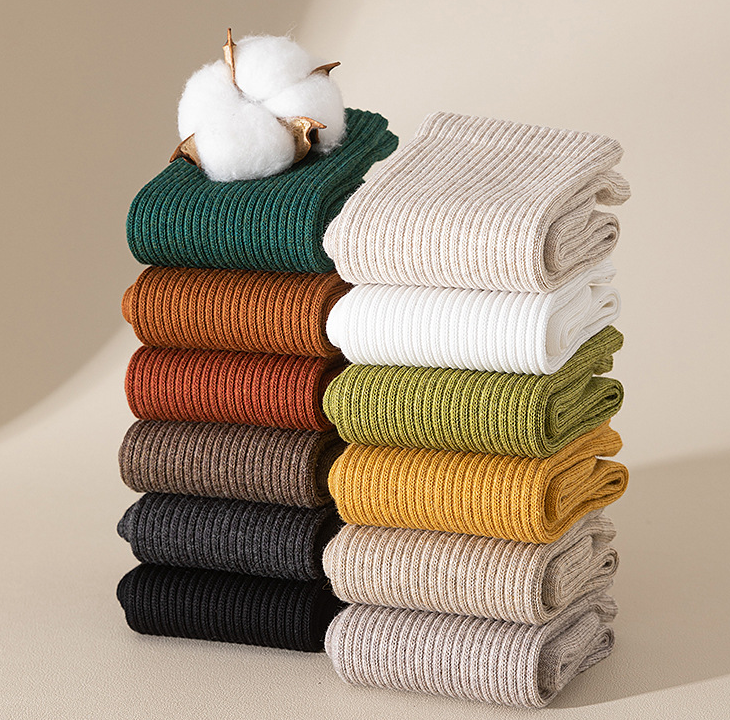
The Truth About 100% Cotton Socks
True 100% cotton socks do exist—but they're rare,and for good reason.
1.Pure cotton has zero elasticity.That means socks made entirely from cotton often lose shape,sag,or slip off your heel.
2.Over time and with repeated washing,they tend to shrink,harden,and even tear.
3.Without added stretch,they can't conform to your foot or stay comfortably in place throughout the day.
That's why most brands avoid using 100% cotton for everyday socks.It's not just about cost—it's about function.
Cotton vs Polyester Socks: A Practical Comparison
Feature | Cotton Socks | Polyester Blend Socks |
Breathability | ✅ Excellent | ➖ Good,depending on blend |
Moisture Management | ❌ Absorbs,but dries slowly | ✅ Wicks and dries quickly |
Comfort | ✅ Soft and skin-friendly | ➖ Varies by blend |
Durability | ❌ Prone to wear | ✅ More resistant to abrasion |
Fit & Elasticity | ❌ Limited | ✅ Stretchy and supportive |
To put it simply: cotton vs polyester socks isn't about good vs bad—it's about finding the right balance.Polyester and spandex improve elasticity and longevity,while cotton brings softness and breathability.
Why Blended Socks Are Still Breathable
If you're seeking breathable socks material,high-quality cotton blends are your best friend.Most high cotton socks today feature 80–95% cotton,enhanced with 5–15% elastic fibers like spandex or polyester.
These blends:
1.Feel like cotton on the skin
2.Stay in shape after multiple washes
3.Prevent heel drop or toe bunching
4.Still breathe well—especially if combined with mesh knitting
✅ Look for keywords like "combed cotton,” "seamless toe,” or "fine gauge knitting” for a premium experience.
Why "100% Cotton” Isn't Always What It Seems
Here's a little-known fact: in many regions,the term "pure cotton”can legally apply to any sock with more than 75% cotton content.So those "cotton socks” on the shelf? Likely not truly pure.
Truly 100% cotton socks are generally reserved for:
1.Sleeping socks
2.Baby socks
3.Medical or anti-allergy socks
They're soft,chemical-free,but not suited for long walks,sports,or everyday wear.
Evolving Alternatives: Beyond Cotton
Concerns about cotton's environmental impact have also pushed brands to explore alternatives.Today's sock material guide includes eco-friendly and performance fabrics such as:
1.Organic Cotton
2.Bamboo Fiber
3.Modal & Tencel (Lyocell)
4.Soy Protein Fiber
5.Recycled Polyester
These next-gen fibers are breathable,durable,and often outperform both cotton and synthetics in sustainability and function.
So,What's the Best Option for Daily Wear?
You may not need 100% cotton socks to get the comfort you're after.Instead,look for:
1.High cotton socks with 85–95% cotton
2.Blended fabrics that offer structure + softness
3.Reinforced heels/toes for added durability
4.Seamless stitching to avoid friction
This balance ensures your socks feel great,breathe well,and hold up in real life.
Customize Your Ideal Socks with Feelingwaysox
At Feelingwaysox,we help brands and businesses design socks that look great,perform better,and feel amazing.Whether you're after high cotton socks,performance blends,or eco-friendly options,we've got the right material solution for your goals.
Because socks should be built for comfort,designed for function,and crafted to last.