
 English
 German
 French
 Russian
 Spanish
 Japanese
 Korean
 Portuguese
 Ukrainian
 Arabic
 Italian
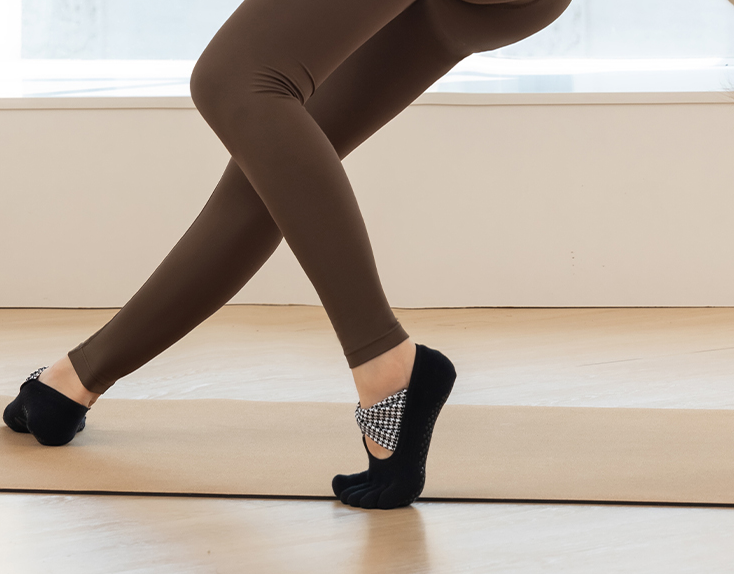
What Are Grip Socks?
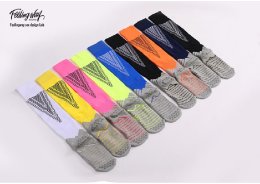
Grip socks — also known as non-slip socks — feature silicone dots or rubberized patterns on the soles.These provide traction on smooth studio floors or equipment platforms,preventing your feet from sliding during dynamic movements.
Unlike regular athletic socks,grip socks are designed for both comfort and control.Some come in full-toe versions for warmth and hygiene,while others are open-toe to allow better contact with the mat and a natural barefoot feel.
Why Grip Socks Are Essential for Pilates
1.Prevent Slipping and Accidents
In Pilates,balance is everything.Whether your foot is on a reformer carriage,a mat,or a chair pedal,any slip can throw off your alignment — or worse,cause injury.
Grip socks reduce slippage,helping you transition smoothly between poses and maintain steady footing even when your feet start to sweat.
2.Enhance Proprioception and Body Awareness
A stable connection between your foot and the surface below boosts proprioception — your body's ability to sense movement and position.
That means your muscles and nervous system can respond faster and more accurately,improving coordination and posture control.
3.Strengthen Stability in Every Move
During movements like lunges,bridges,or side splits,your feet act as key support points.Grip socks reinforce that stability,allowing smoother motion and reducing strain on the knees and hips.
How Grip Socks Perform in Different Pilates Styles
Mat Pilates:
They help prevent slips on smooth mats during planks,bridges,and roll-ups — especially when sweat is involved.
Equipment Pilates (Reformer,Cadillac,or Chair):
Grip socks become even more valuable.These machines have slick surfaces,and strong traction ensures your feet stay secure while shifting between platforms and pedals.
Hot Pilates:
In heated environments,feet sweat more,increasing slip risk.Breathable,moisture-wicking grip socks are your best defense for maintaining balance.
Tips for Choosing and Using Grip Socks
1.Check the Grip Quality:
Over time,silicone grips wear down.Choose durable,high-quality materials and replace them when the traction weakens.
2.Find the Perfect Fit:
Too loose,and they'll slide.Too tight,and they'll restrict circulation.Look for elasticity that hugs the foot comfortably.
3.Keep Feet Dry:
Moisture can reduce grip effectiveness.Always start your session with dry feet — or keep a spare pair handy.
4.Prioritize Hygiene:
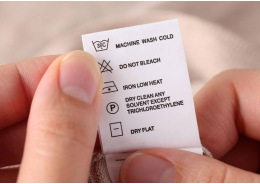
Grip socks protect your feet from bacteria on shared equipment,but they should still be washed and air-dried regularly.
5.Alternate with Barefoot Practice:
While grip socks improve safety,some barefoot sessions can strengthen small foot muscles and improve natural flexibility.
Grip socks might look like a small accessory,but they can make a big difference in your Pilates practice.They provide the traction,comfort,and confidence to help you move with both stability and elegance — whether you're mastering your first roll-up or perfecting an advanced reformer sequence.
So next time you head to class,don't forget your Pilates grip socks — your foundation for balance starts from the ground up.